
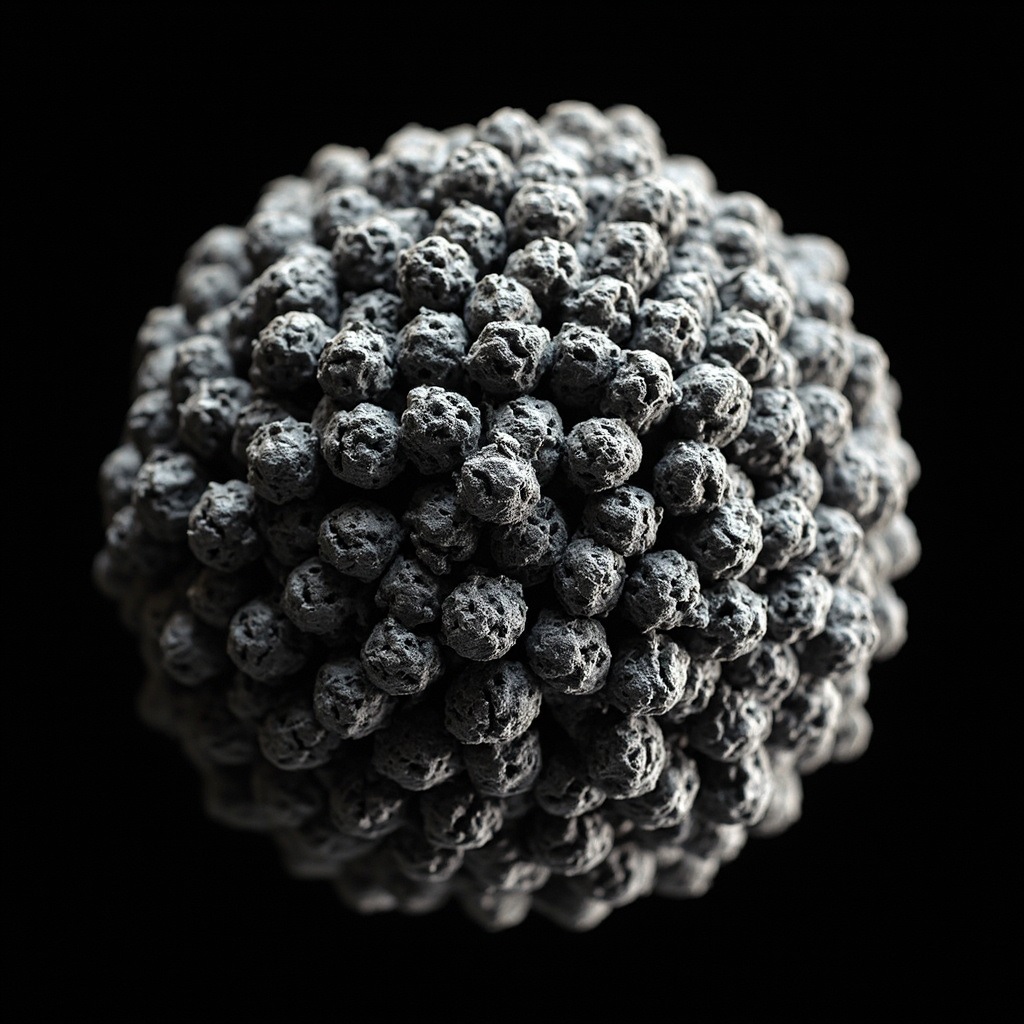
 The difference between a battery that fades after 500 cycles and one that still delivers 90% capacity after 2,000 cycles often comes down to something you cannot see with the naked eye: microcrystallinity. For manufacturers pushing Spherical Graphite anodes to their limits, the carbonization temperature profile is not just a process parameter—it is the single most decisive lever for controlling crystal perfection, particle integrity, and ultimately, electrochemical performance.
Let’s cut through the noise. Spherical graphite is the backbone of lithium-ion anodes, but its raw form is a mess of turbostratic disorder, surface defects, and inconsistent interlayer spacing. The carbonization step, where amorphous carbon transforms into ordered graphite, is where you either build a high-performance material or create a liability. The temperature profile—how fast you ramp up, where you hold, and how you cool—dictates whether those graphene layers stack neatly or remain a jumbled, low-conductivity disaster.
Here is the hard truth: a single-ramp profile to 2,800 degrees Celsius sounds aggressive and efficient, but it often creates a skin of highly ordered graphite on the particle surface while leaving the core under-carbonized. That thermal shock causes microcracking, increased surface area, and first-cycle irreversible capacity loss that can hit 10% or more. Our proprietary multi-stage profile solves this. By introducing a controlled plateau at 1,200 degrees Celsius, we allow volatile removal and initial layer rearrangement to happen without violent gas evolution. Then, a gradual climb to 2,600 degrees Celsius, followed by a sustained soak, ensures that the graphitization front penetrates uniformly from surface to core.
The result? Lattice parameters that hit the sweet spot: a d(002) spacing of 3.354 angstroms, crystallite height Lc exceeding 100 nanometers, and a R value (I1350/I1580) below 0.15. That is not just lab data—that translates to a 15% boost in reversible capacity and a 30% reduction in DC internal resistance compared to conventionally carbonized material.
But microcrystallinity is not just about numbers on an XRD pattern. It is about consistency across every batch. Our temperature control system maintains a gradient of less than 5 degrees Celsius across the entire furnace load. No hot spots, no cold zones, no particles that graphitize faster than their neighbors. This uniformity means your anode slurry behaves predictably, your coating adhesion improves, and your cell assembly yields skyrocket.
We have tested this against competitors. Their material shows a broad, asymmetric (002) peak—a fingerprint of mixed crystallinity phases. Ours shows a sharp, symmetric peak. That is the signature of a product engineered for the highest energy density applications: electric vehicle cells, power tools, and grid storage systems where every milligram of capacity matters.
Do not let a poorly optimized carbonization profile sabotage your graphite. The temperature curve is your most powerful tool for tuning microcrystallinity. We have dialed it in, verified it with Raman spectroscopy and HRTEM, and proven it at ton-scale production. Your next generation of anodes deserves nothing less.